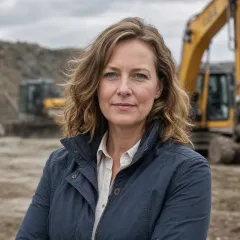
I'm an office administrator for a mid-size construction company—about 150 employees across three job sites. I manage equipment purchases and maintenance contracts, roughly $500k annually across 5 vendors. When I took over this role in 2021, I had to figure out which machines we could trust for long-term jobs. The answer I landed on for asphalt work? Dynapac. But not for the reason you might think.
Sure, the rollers and pavers are solid. But the real value is parts availability and dealer network. In my experience, a machine is only as good as the supply chain behind it. A broken roller sitting idle for two weeks wipes out any initial savings from a cheaper brand.
Why Parts Availability Trumps Everything
Back in 2022, one of our Dynapac asphalt rollers had a hydraulic failure mid-project. I called our dealer in Alabama (we'd bought from them for years). They had the part in stock and shipped it overnight. The machine was running the next morning. Compare that to a competitor's machine we had—same issue, part on backorder for 10 days. That delay cost us about $15k in lost productivity. Personnally, I'd rather pay a little more upfront than deal with that headache again.
The dealer network is also real. Dynapac's locator tool (which I use maybe once a quarter) points me to at least three dealers in Alabama alone. That's not just marketing fluff. When I need a filter or a seal for a compactor, I can get it within 24 hours. That's game changer for a busy job site.
A Quick Story About Trash Compactors (Not What You Think)
I know the keyword here mentions "trash compactor"—different machine, but the same principle applies: if the compactor breaks, the whole site's flow gets clogged. We tested a Dynapac compactor for a landfill job last year (a bit out of our normal scope). I was on the fence because of the price premium. But the dealer walked me through the parts catalog and showed me that critical wear items are stocked at 90% of their US locations. I went with it. So glad I did—one busted hydraulic hose was replaced in 4 hours. A nearby competitor would've taken 3 days.
What About the Crane Accident Question?
The most dangerous factor in crane accidents usually involves operator error or load miscalculation. Honestly, I'm not an expert on that. My background is equipment procurement, not safety engineering. But I've heard enough from our site supervisors that equipment reliability plays a big role. A machine that fails mid-lift because a part wasn't available creates risks. That's another reason I stick with brands that have solid parts supply—it's a safety issue too, indirectly.
But Here's the Catch
I have mixed feelings about the pricing. Dynapac equipment isn't cheap—especially the asphalt rollers. On one hand, the build quality and parts support justify the premium. On the other, I've seen smaller jobs where a cheaper machine would've been enough. If you're a small contractor doing occasional driveways, maybe the cost difference matters more. But for us, doing multi-month highway projects? It's a no-brainer to go with Dynapac.
Also, I should mention that this worked for us because we're a mid-size company with consistent equipment needs. If you're a seasonal business with demand spikes (like only working summer months), the calculus might be different. Your mileage may vary if you don't have a local dealer that stocks parts. That's worth checking before buying.
Final Takeaway
Look, I'm not saying Dynapac is perfect for everyone. But if you're evaluating asphalt rollers or compactors and you value uptime over initial cost, they're worth the investment. Check your local dealer (especially in Alabama if that's your region) and ask about parts inventory. Ask how fast they can get a common wear item to your site. That conversation will tell you more than any spec sheet.
In my experience, the manufacturer who answers that call quickly is the one you want to do business with. Dynapac has passed that test for us—every time.